From Sales Manager to Roofing CEO: How Tucker Pies Is Working His Way Out of the Business

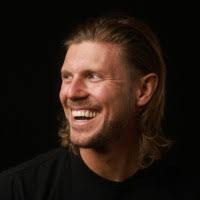
- The story: Tucker Pies went from car sales to installing roofs to RV sales, struggled through his first 90 days selling roofing, then built a door-to-door sales team to about a million dollars a month before starting All Concepts Exteriors in Bend, Oregon.
- The hard lesson: When you become the owner, the systems and pay plans that worked at your old company may not work at yours, and taxes become your problem.
- The big takeaway: Whether you plan to sell or pass your company down, you have to work your way out of the business. For Tucker, systems are the easy part. Letting go of control is the real barrier.
Tucker Pies does not think most people grow up wanting to be a roofer. He grew up wanting to make money, bounced between sales jobs, and ended up running his own roofing company. His path to becoming a roofing CEO is a useful case study for any owner trying to build a company that can run without them.
On the debut episode of the Roofing CEO Podcast, host Mike Abramowitz sat down with Tucker, founder of All Concepts Exteriors in Bend, Oregon. Mike introduced him as someone who has been running his business for over three years and has been in roofing for over seven. The most useful part is how honestly Tucker talks about the jump from sales manager to owner.
Roofing Chose Him: Car Lots, a Flat Roof Crew and RV Sales
Tucker does not believe he chose roofing. "I think roofing chose me," he said, adding that he thinks that is the case for a lot of people in the industry.
He started his career out of high school in car sales, but fell out of love with the industry because of management styles. After complaining on a duck hunting trip, a buddy asked, "dude, why don't you just come roof with me?" Tucker's first reaction: "that sounds terrible."
He went anyway and started on a flat roofing crew doing installs. Then he left the industry entirely after a death fall on one of his jobs. "Safety is a big thing," he said.
Next came RV sales, where "you're not really selling a product, you're selling fun." The problem was the calendar: once September and October hit, customers stopped walking through the door in Central Oregon.
The First 90 Days: Selling a Need, Not a Want
With sales and roofing experience, he took a job selling roofing. "I thought, man, this is going to be amazing," he said. Then reality hit: "my first 90 days, it was a very eye-opening experience... because I was terrible at it."
How terrible? "Couldn't pay my bills because I wasn't selling enough." He had the product knowledge and the sales background, but he could not figure out how to sell roofing. The breakthrough came when he realized that in roofing, "you're selling a need versus everything that I'd ever sold before that I was selling wants."
When Mike asked him to explain the difference, Tucker put it in one word: "I think the difference there is urgency."
Tucker Pies: So selling a need, right, is, hey Mike, so I was just up on your roof... I found a couple of things up there... And I'm going to show you actual photos of your roof.
In his example, he walked through adhesive failure, granule loss and failing pipe boots. A car buyer is choosing features they want. A homeowner with a failing roof has a problem that has to be solved.
Building a Door-to-Door Team to $1 Million a Month
Once the need-versus-want idea clicked, Mike assumed the next step was starting his own company. Tucker's answer: "No, no, no, no."
The company he was selling for had a management style he described as "very, very tyrannical, military-esque," very similar to what he had left in the car business. So he left without a job. Another roofing company recruited him to come on and build a door-to-door team. He had not physically knocked doors at his old company, but "I understood the model."
For the first month or so, he knocked his own doors and sold his own deals. Then he started recruiting, including a rep who "wasn't selling anything" at his old company. Tucker offered to give him the scripts and teach him how to sell if he would knock doors for the setter closer model they were running.
That rep turned out to be the best setter Tucker has ever hired. About 30 days in, Tucker told him: "brother, you don't want to sell. You will make less money selling than you would as a setter." He became the setter manager and helped recruit and build the team.
By the time Tucker left, "my sales team was doing about a million dollars a month... kind of like on repeat." As he put it: "everybody was making money... And we were profitable."
From Regional Sales Manager to Roofing CEO
Eventually Tucker got pushed out of that company. By then he was a regional sales manager, and he did the math on his own experience: "I've installed it myself. I've, you know, sold it. I've managed it... I don't see why I can't do this myself."
So he started All Concepts Roofing, now All Concepts Exteriors. He calls it "a rough journey" and also "one of the most rewarding things that I've done."
The Two Learning Curves Nobody Warns You About
Mike asked Tucker about the biggest transition from managing a sales team to running an entire roofing business. Tucker named two.
1. Your company is not your old company
When you work for someone else, "there's systems and processes kind of already in place that you're, you're working off of." When you start your own company, Tucker said, "you have to realize that you, your company is not that company. And what worked for them might not work for you."
His example was pay plans. Closers and setters were all commission, and that did not work at his company. "It was shocking because it was motivating for, you know, the same people at this other company, but it wasn't motivating for the people that were coming into my company."
That forced him to rethink compensation from scratch: how to build a comp plan where people "see the carrot and want to run after it," how to avoid capping income, and how to keep it from being easy while making sure "it has to be attainable."
2. Taxes
The second learning curve was simpler and more painful. "I'm not an accountant... I've taken accounting classes and I still don't understand it," Tucker said. "Taxes was a huge learning curve."
When you move from manager to owner, you inherit every system your old company quietly handled. A free business audit is one way to see which of those gaps are sitting in your company right now.
Generational or Sale: Why the Exit Question Starts Early
Mike asked the question every owner eventually faces: what is the long-term play?
Tucker admitted, "I feel like that, that answer changes every day." He is leaning toward making it generational, "something to pass down to my kids," which he said would be "something really special to do as a family." But he is also realistic: "if it doesn't make sense anymore to own a roofing company, then yeah, I'd probably sell it."
What matters most to him is bigger than the exit: "my ultimate goal is to change the industry," pushing out contractors who "don't do quality installs or don't care about building codes." He said he could not feel good about selling "knowing that there's a possibility that it goes the other direction."
The Business That Dies With Its Owner
To frame what comes next, Mike shared a personal story. His dad is 85 and runs a plumbing company "the exact same way today that he did when I was a kid."
Mike Abramowitz: He is the business... So unfortunately, my dad built a business that is impossible to be generational because he is the business. Everything runs through him. Payroll runs through him. His team runs through him. The jobs run through him.
His dad still drives around paying his guys in cash on Friday. "It's wild and it's wildly inefficient," Mike said, adding that he is "learning from my dad's mistakes."
A company can be profitable and still have no future beyond the person running it.
Working Your Way Out of the Business
So what is Tucker doing now to keep both options open? His first answer: "working my way out of the business."
He believes his value is "better used somewhere else rather than an employee in the business." The goal is "replacing myself... so that I can focus on working on the business and, you know, not in the business. Because whether I decide to sell or pass it down, that's something that needs to happen."
He tied it directly to valuation. If he sells while still acting as an employee in the business, "I'm probably not going to get the same multiple." When he reached for the term, Mike supplied it: key man risk. And the same logic applies to passing it down. "Whoever I'm passing it down to" needs "to be able to take it over and not rely on me."
Mike summed up what that requires: "systems and processes and, you know, playbooks and SOPs and a lot of predictability," plus "talented whos that you need to find and raise them in a healthy environment and culture."
If you are a roofing owner who wants to understand how key man risk shows up in a buyer's eyes, you can start with a roofing company valuation from Forge Strategic Equity.
Why Letting Go of Control Is Harder Than Building Systems
Tucker does not think systems are the hard part.
Tucker Pies: I think for a lot of business owners in my position, it's harder to let go of the control.
Tucker Pies: I think the control is the barrier to entry versus, um, you know, systems and process.
Why is control so hard to release? "I have a vision of the way that I want things to run. And it's scary to think that if I let go of control or I hand this over to somebody else, that maybe it doesn't run that way."
Some of that fear comes from experience. "My first year in business, I kind of handed over the reins to somebody... that I thought that I could trust. Come to find out, could not." He admits that left him with "a little bit of fear and resentment."
His answer is not to hold on forever. It is to delegate more carefully: "finding the right person... not jumping into things too quick and, you know, kind of easing, you know, basically grooming somebody into the position." He added, "I'm getting better at it."
For any owner burned by a bad hire, the lesson is not to stop delegating. It is to hand off in stages to the right person.
What Your Future Self Is Counting On
Near the end, Mike asked Tucker, who is 28, what his future self is counting on him to do now. Tucker said he thinks about this a lot: "I think 38-year-old me is counting on me to do exactly what I'm doing right now... take the risks, right? Spend the money. Come out and do these boot camps."
He said this was his seventh or eighth boot camp. Much of the information repeats, but networking with owners who "are doing double or triple the revenue that I am" always teaches him something. His future self, he said, would want him to "network more and leave everything on the table."
Build and Sell Trust Before Anything Else
When Mike asked if there was anything he had not covered, Tucker offered advice for anyone starting or thinking about starting a roofing company.
Tucker Pies: Build and sell trust before you sell anything else... have integrity and show it and continue to prove that every day, even if it's just to yourself.
He also urged owners to be honest with homeowners and themselves, and to stay a student of the business: "Just because you own your business... does not mean that you know how to run your business to the best of its ability... be a student to it, be open to it, and be able to adapt."
What Home Service Owners Can Take From Tucker's Story
You do not have to be in roofing to apply these lessons. Three questions worth asking:
- Are you still running someone else's playbook? Pay plans and processes from a past company may not fit your team.
- Could your company run for a month without you? If everything runs through you, you carry key man risk that limits both a sale and a handoff.
- Is control the real bottleneck? If you know what systems you need, the next step may be grooming the right person into the role.
The Business Playbook is a good starting point if you want a clearer picture of how to build a company that runs without you. And if you want to see how an operating system for home service companies fits together, start at OwnersOS.