How to Build a Roofing Brand That Lasts

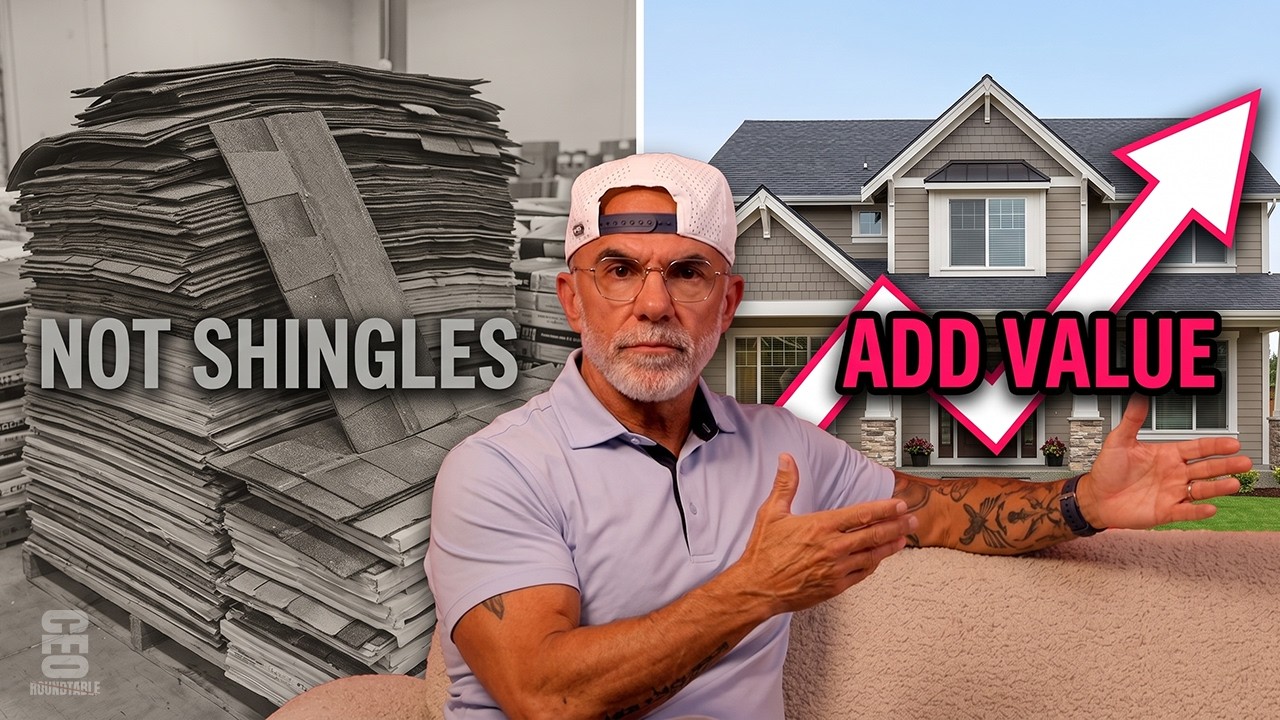
- The idea: Tony Munoz has run his Jacksonville company since 1995. He says a lasting roofing brand is anchored to adding value to the home, not just replacing a roof.
- The move: After 30 plus years as Martin Home Exteriors, the company rebranded to Full Strength, with a pink elephant mascot named Hammer that stands for strength, tough skin and a long memory for customers.
- The lesson for owners: A brand only lasts if the culture behind it does. Tony defines culture as how you treat people, how you make decisions and whether every build is treated like your own.
Anyone can replace a roof. Very few roofing companies build a name that people in their city still recognize three decades later. That gap, between doing the work and building a brand, is what this episode of the Roofing CEO Podcast is about.
Host Mike Abramowitz sat down with Tony Munoz, owner of Full Strength (formerly Martin Home Exteriors), a Jacksonville roofing, siding and stucco company that has been in business since 1995. They recorded the conversation in Salt Lake City at a bootcamp. Tony talked about why every project is measured by the value it adds to the home, why he rebranded a 30-year-old name, what a pink elephant has to do with roofing, and how culture keeps a brand intact as people come and go.
If you own a roofing or home service company and you want your name to mean something long after your current crews move on, this is worth your time.
A Roofing Brand Starts With What You Anchor Every Job To
When Mike asked Tony for the short version of his story, Tony did not start with revenue or crew counts. He started with the company's history and the brand it has built.
Tony: Our history extends back to 1995... so 30 plus years. And the brand equity that we've built in Jacksonville, I'm super proud of.
What makes that brand equity possible, in Tony's words, is a specific standard for every project. The job is not the roof. The job is the home.
"We're really trying to anchor to adding value to the home versus just doing a roof replacement or a siding replacement, right? We look at the project with a lens around how do we add value to the home and ultimately try to reset the market comparable for that home in that neighborhood."
A company that thinks in terms of "replace the roof" competes on price. A company that thinks in terms of the home's value is selling an outcome the homeowner actually cares about.
What this looks like in practice
Tony later put a number on the idea, using round figures so listeners could follow along. On a $40,000 project, the question his team asks is simple:
"How do we ensure that we work with that homeowner and with our crews to ensure that the value of that project exceeds the $40,000 that the homeowner paid?"
That question turns a vague brand promise into something your crews can check themselves against on every job.
Where the Standard Came From: The Contractors Who Showed Up for His Mom
Mike pushed on whether that value-first approach was always there or something Tony learned after some mistakes. Tony said it goes back to how he grew up.
Tony: I was raised by a single parent, my mom did everything imaginable to provide a happy home, a safe home... whenever something had to happen at home, there was always a contractor there doing the work for us.
Tony remembers how those contractors treated his mother for the first 15 years of his life, and he made himself a promise.
"I always said, if I ever have my own business, I want to model the same behavior that my mom received. And so when I go into a customer's home, you know, set aside the age of that homeowner, I look at and I think back to how that value was provided to my mom."
This is the part of branding that most owners skip. Logos and trucks are the visible layer. Underneath, a lasting brand usually rests on a reason the owner can explain in one breath. Tony's reason is personal, and it has held up. As he put it, it is "something that... has stood the test of time for us in Jacksonville," and the company is "by far one of the more recognized contractors when it comes to roofing and siding."
Should You Rebrand an Established Roofing Company?
Rebranding a company with 30 years of recognition is a big decision. Tony made it anyway. Historically, the company was called Martin Home Exteriors. It has now gone through what he called "a significant rebrand to Full Strength."
The reason he gave was about scope, not style:
"That allows us to really have three different scopes in what we offer, and that's roofing, siding, and stucco work. And so we do both residential and we do commercial work in those three different scopes."
For owners weighing a rebrand, that is a helpful test. A new name should do a job the old name could not do. In Tony's case, he said Full Strength lets the company offer roofing, siding and stucco across residential and commercial work.
Meet Hammer: What a Pink Elephant Says About a Roofing Brand
When Mike asked what Tony hopes the next generation of roofers takes from watching him, Tony's answer went straight to the brand he is building, and to its mascot.
Tony: Hammer is essentially the mascot that we now have with Full Strength, and it's a pink elephant.
The mascot is memorable, but Tony was clear that each part of it is meant to stand for something:
- Strength: "Obviously the strongest animal in the jungle."
- Tough skin: "It's the animal with the toughest skin. And so we want to portray and build to those standards."
- Memory: "We also have a good memory, much like an elephant does. So we don't forget our customers' names, we don't forget, you know, birthdays."
That last point is the one owners should pay attention to. A mascot is marketing. A promise to remember customers' names and birthdays is an operating standard, and someone on the team has to own it. Tony tied it back to why the work is personal for him:
"This is not just doing a roofing replacement or a siding replacement. It's like, how do I impact, whether it's the homeowner's forever home or potentially something that they're going to pass down to their kids, how do I add value and make sure that I protect the exterior assembly of that home to its fullest potential? And we do that the Full Strength way."
Professionalize Construction Again
Near the end of the conversation, Mike asked Tony if there was a topic he felt gets overlooked. Tony talked about a reputation problem. He often comes into a conversation with a homeowner or developer who has had a bad experience with a former roofer or contractor, so a lot of the initial relationship building is focused on "repairing that perception with the homeowner."
His answer to that problem is a message he shares with everyone in the company, from sales to the CFO.
Tony: Whether you're a salesperson or you're a project manager or you're running operations for the team or you're running marketing... even our bookkeeper, our controller, our CFO, we have to professionalize construction again.
Tony described what that means for his team in plain terms: "Treating people with respect, making sure that our word means something. You know, for us, our word is our warranty."
He also linked those standards directly to growth. In his view, the pillars are what differentiate "what we do, but as importantly, you know, how we do it," and "there is a mission and a vision and a value system for us. And that's ultimately the reason why we're able to secure so many relationships. And with that relationship is ultimately how we can translate that to growing our business."
For a roofing owner, that is the business case for brand. The relationships are the pipeline.
How to Sustain Culture When People Move On
Mike asked the question every owner with more than a few employees eventually faces. After 20 or 30 years, with people leaving and new people coming in, how do you keep the team aligned?
Tony started by saying what culture is not.
Tony: Culture is more than just ping pong on Fridays, free beer on Friday after work and pizza, right? It's culture for us stands for how we treat others.
He then laid out what it does include:
- Psychological safety: "How we provide a psychologically safe environment so that people can bring their best ideas to work."
- Shared decisions: "How do we make decisions as a collective to ensure that we move the business forward?"
- Ownership of the work: "How do we ensure that, you know, we treat every build as if it's our own build?"
Tony said that undercurrent is what lets the team sometimes work past the hour many people go home, or come in on a Saturday to turn over a project because another one of a similar size, or a bigger one, starts Monday. "It's less about us, it's really about being selfless in our approach," he said.
Mike connected that to the systems underneath: how you hire, train and onboard, your meeting cadence, how you manage the crew, and how you let someone go while communicating the standard. Tony agreed, and credited the support around him.
"We're blessed to have, you know, partners like Sam who have really paved the path for us to, you know, use their experience to like train our sales reps better. You know, have a door, you know, door-to-door knocking team... the ancillary components of running a business, you sometimes need a partner to help you along the way."
Turning culture into systems
This is where a lot of owners get stuck. Culture lives in the owner's head until it is written into the way the company hires, trains, meets and holds people accountable. If you want a practical starting point, our post on how to build a sales culture that actually sticks covers the standards and rituals side, and OwnersOS is the operating system built for exactly that: org chart, role clarity, KPIs and a one-on-one rhythm that keeps the business running without you in every room.
Does a Roofing Brand Become Generational?
A brand that lasts 30 years raises an obvious next question: does it last another 30? Mike asked Tony directly. Mike's own dad, he shared, owns a plumbing business and is 85, still running it six days a week and answering every phone call, the same way he has for about 50 years. But it cannot be passed down, because there was never a vision of handing it on.
Tony has three kids. His oldest is going into the medical field. His middle son is heading to Auburn to study building science, and Tony said "if there's anybody that could... take over the business, it would be my middle son." His youngest, who is 10, "is as energetic and motivated about construction as I am today."
Tony also pointed out the difference between his path and his son's:
"He's going to get the formal training that I didn't get. I learned everything about construction in the field, on a roof... removing sheathing, installing sheathing, doing siding, all the rough carpentry that goes with construction. I learned it in the field. There was no formal training."
Tony did not claim to have the answer yet. "So I don't know," he said. But the contrast Mike drew is the useful part for any owner. A business that depends on the founder answering every call can only last as long as the founder does. A brand with clear standards, a culture people can repeat and systems that do not live in one person's head has a chance to outlast any one person.
What Roofing Owners Can Take From Tony's Approach
Pulling the episode together, here are the questions worth asking about your own company:
- What do you anchor every job to? Tony's answer is adding value to the home and resetting its market comparable, not just replacing a roof.
- Does your name fit what you actually do? Tony said the move from Martin Home Exteriors to Full Strength lets the company offer three scopes: roofing, siding and stucco.
- Can your team explain what the brand stands for? Hammer works because strength, tough skin and memory each map to a standard.
- Is your culture written down, or just felt? Hiring, training, meeting cadence and how you let people go are where culture survives turnover.
- Could the business outlast you? If the answer depends on you answering every call, that is the first thing to fix.
If you are thinking about the long game, it is also worth knowing what your company is worth today. Roofing owners can see what their roofing company is worth through Forge Strategic Equity, whether or not a sale is ever on the table.