How to Turn Around an Unprofitable Home Service Business: Lessons From Boundless's Near Collapse

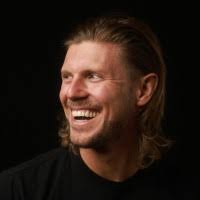
- The problem: Boundless grew fast on bought appointments, then lost money for almost three years, at one point about $200,000 a month with roughly $8 million owed.
- The turn: CEO Riley Traveller shut down the call center, stopped buying leads and changed setter pay to signed deals, and that same month became the setter program's most productive in company history.
- The lesson for owners: You cannot grow your way out of upside-down unit economics. Fix the model, go back to the identity that built the company, and let your best people find each other.
Most owners who want to know how to turn around an unprofitable business are looking for a growth lever. More marketing, more reps, more markets. Riley Traveller, CEO of Boundless, tried exactly that, and it nearly sank the company.
On this episode of the D2D Podcast, Sam Taggart sits down with Riley to unpack how an 8-figure door-to-door solar company ended up deep in debt, what Riley decided in a single partner meeting, and why cutting spend instead of adding it is what finally made Boundless profitable. The pattern applies to any home service business that has started buying its growth.
From Door Knocker to CEO
Riley's background is classic door to door. Sam introduces him as someone who "started in the alarm space, much like the rest of us" and then moved into the early solar days at Solar City. Riley was recruited into summer sales at Utah State by his brother-in-law, Brian Timms, at Pinnacle, and later recruited into solar by James Allred right after college.
He remembers the early solar pay plan clearly: "If it was a referral, it was 190 bucks a kilowatt. If it was a self-gen, you got 210 a kilowatt." Boundless launched in June 2020 with Freedom Forever as its installation partner, and Sam notes the company has "done over 20,000 accounts just since COVID in 2020."
That track record is what makes the next part worth studying: experienced door knockers with real volume still lost money for years.
Why Growth Did Not Fix the Losses
Riley studied business in college and built what he thought was a conservative model. "They always say like, you know, bake in 20% more cost in your models," he says. "Sure enough, uh, the costs were higher and the gross profit or the revenues per project were lower."
The gap meant Boundless needed far more scale to break even than he planned. Then he shares something most owners never say out loud: "Boundless didn't make money for almost three years."
He describes it through the holidays. Christmas one, the company was losing money every month. Christmas two, still losing. Christmas three, still losing. He had signed a personal guarantee on the debt.
Riley Traveller: We're losing 200 grand a month. We're chasing our tail. Uh, we're trying to outgrow our problems.
Riley Traveller: ...it was about 8 million bucks that I owe and we're still not making money.
The critical line is how he explains why volume could not save him: "You spend money on marketing to grow, but if, if you're upside down on those deals, you can't grow out of that hole. So we're upside down on our marketing spend, we're growing in volume, but we're not growing in profits."
This is the trap for any owner who confuses revenue growth with business growth. If each job loses money once you count what it cost to acquire, every additional job digs the hole deeper. It is the same reason we push owners to understand the unit economics of scaling a home service business before they pour fuel on marketing.
How Lead Dependency Crept In
The losses did not start with bad leadership. They started with something that worked too well. When Boundless launched, Freedom Forever had a marketing engine that delivered pre-booked appointments. "We'd wake up in the morning and we'd have a hundred appointments pre-booked, pre-scheduled," Riley says. Because the appointments were charged at install, "it was cash neutral and it was just growing the business."
Then in early 2021 the lead supply changed. Riley points to Apple limiting how Facebook could track users across other apps: "the cost per lead starts going up, but the quality of those leads is going down at the same time. So that's not a great combo if you're reliant on buying leads, which I became that. We became that. Despite everything I've ever said my whole life."
What makes the story useful is how honest he is about the cultural drift. "We just became lead dependent despite my whole background, my partners, like every single one of us, we knock doors, we go get business. And then we became this thing. And then the people that we had became dependent on it. And then we brought in new people that that's what they knew."
Once a team is hired and trained around bought appointments, the leads stop being a tactic and become the business model. That is a hard thing to unwind, and it is why we wrote about how to grow a home service business without just buying more leads.
Spending Scared: The Two-Year Detour
When the free-flowing appointments dried up, Riley did what most owners would do. He tried to recreate them. Boundless opened a call center, started buying leads, cold called, took warm transfers and launched a door-to-door setter program.
He is candid about the motive: "Well, we're building it because we got all these sales people that want leads. And if I don't got leads, they're going to leave us and go somewhere else. So I'm playing scared and I'm basically just trying to spend money to solve this problem."
The result: "It was 24 calendar months of that thing never one time making money."
The spending was not driven by a plan for profit. It was driven by fear of losing people. When the only reason behind a cost is fear that people will leave if you stop, that cost deserves the hardest look on your P&L.
The Partner Meeting That Changed Everything
Riley spent the Christmas break thinking. New Year's Day 2023 fell on a Sunday, so he called his partners in for Monday, January 2. "I got 8 million bucks in counting," he says. "I don't know how we're going to get out of this hole. But really I did. I knew what the problem was."
Riley Traveller: The problem was we abandoned our identity. We stopped being an organization that went out and created business.
Boundless has a manifesto, and Riley quotes the part he had drifted from: "we are creators of our own destiny." Sam jumps in to ask whether his team has read his book Eat What You Kill, and Riley says he had just been flipping through it.
Riley also credits an outside example for giving him the nerve to act. He watched Elon Musk cut "70, 80% of the staff" at Twitter and remembers the reasoning: "He said, Twitter will go bankrupt. So we don't actually have a choice. We have to do this and we can make it work."
Three Hard Decisions
In that one meeting, Boundless made a set of changes that cut costs overnight.
1. Shut down the call center
"We're gonna shut down the call center. We we're gonna have to lay people off. Like that sucks," Riley told his five partners. He calls it one of the hardest things he has done, both making the decision and executing it. Boundless gave people "a good healthy severance so they have a runway to find their next project," and he says, "I sleep much better at night knowing that we took care of people in that transition."
2. Stop buying leads
The second decision was simple to say and hard to live with: "we shut down the call center, we stopped buying any leads."
3. Pay setters on signed deals, not appointments
The setter comp plan was rewarding the wrong behavior. "Our most valuable setters are the ones that create fewer appointments but more deals that get to install. They make less money than the person that floods calendars with a bunch of junk."
So Boundless changed it. Setters would get paid on signed deals or take half of the install commission and split it with the salesperson. "Whether we pay the the setters a a thousand bucks a deal or whether they get half the commission on the install," Riley explains, and the setters choose.
This is a compensation design lesson as much as a lead lesson. If you pay for activity, you get activity. If you pay for outcomes, you get outcomes. For more on building plans that reward the right results, see sales rep compensation plans that scale without killing your margin.
What Happened Next
Riley expected the worst. "I'm sitting here thinking we're gonna lose the whole setter program. And then January 2023 was our most productive month in company history for deals from our setter program."
Sam Taggart: I had 100 reps, I had 60 setters, 40 closers.
Sam Taggart: ...we lost like half our guys but our numbers stayed the exact same.
Sam shared that when he was at Solcius, he gave his team a two-week deadline to learn to close or knock their own doors. He says that cleared out "all the fluff because there were people just gaming the system to just figure out how I got paid."
Was there pushback at Boundless? Riley says there were "some pockets of it," but the people with the most respect stayed. "The most productive people like the the ones that that really had the respect of everybody else um stuck around and like went and made it work. And so everybody else followed."
He also puts the risk in perspective. "What I was afraid of was a full-on collapse." But a hard reset was "a better path forward than just you know running towards a fiscal cliff."
Let the Best People Find Each Other
Boundless made one more change that sounds small but says a lot about how to run a sales organization. They stopped scheduling appointments for closers.
"We said we're not scheduling anything. Like you give your leads to who you want to give them to," Riley says. "And I don't police it at all. At all. The best setters know who the best sales reps are."
When a rep complains about not getting leads, the answer is usually in the rep's own results. "Maybe you don't close them... maybe your deals cancel," Riley says. "The better you are the the more leads will find you." Sam compares it to basketball: "why am I not getting passed the ball in basketball? It's like nobody wants to pass you the ball dude."
Riley adds a path for anyone who is not getting fed: "go show some new setter the ropes and next thing you know you got somebody setting leads for you. And all you had to invest was a little bit of time."
The Weight of Being the Owner
The conversation also covers what nobody tells you about becoming a CEO. Riley says the bigger you get, "You have more influence, but you have a whole lot less control. And ultimately how everything goes falls on you."
During the losing years, he says, "I'm putting on a face every day that things are great and we're building something." He only had a few close confidants. "If you're the one on the hook, like you bear that burden solely."
The reward came on the other side. "I remember Christmas number four since starting the business and like we're making money and we're profitable and we've paid down debt," he says. "I became a whole new person the day we started turning profits."
A Turnaround Checklist for Home Service Owners
The episode is a story, not a framework, but the decisions Riley made map to questions any owner can ask this week:
- Are your unit economics upside down? If each job loses money after acquisition cost, more volume makes it worse. Fix the margin before you scale the spend.
- Which costs exist because you are scared? Spend justified only by fear of losing people is a candidate for cutting.
- Does your comp plan pay for activity or outcomes? Paying setters on signed deals instead of appointments rewarded the people who actually created installs.
- Have you drifted from your identity? Boundless got back to being "creators of our own destiny." Write down what built your company and check whether you still operate that way.
- Are you feeding everyone, or letting performance decide? Letting setters choose their closers rewarded the best reps without any policing.
If you want an outside set of eyes on where your own model is leaking, that is exactly what our free audit is for. You can also explore how the OwnersOS operating system helps owners run on scorecards and clear accountability instead of hope.
Final Thoughts
Boundless did not get healthy by finding a new lead source. It got healthy by admitting the old one had changed the company into something it was never meant to be. As Sam puts it, "there's nothing wrong with doing what's best for the company because in turn look where you're at now."
Riley's advice to new reps at the start of the episode applies just as well to owners in a rough stretch: don't quit, and remember "this is the first inning of a long game."