How to Scale a Sales Organization: Danny Dimas on Rebuilding From $360K in Debt

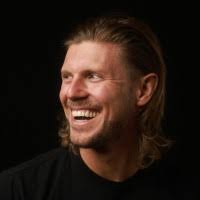
- The story: Danny Dimas, founder of GIG (Global Interactive Group), lost a 150-person organization and ended up $360,000 in debt, then rebuilt from one person into a direct sales company operating across several countries.
- The system: He grew by building an "opportunity system," a clear pathway from rep to trainer to team manager to sales manager, so his people grew the company for him.
- The lesson for owners: Do the work you are best at, hire for the rest, lead from the field, and slow growth down when the back end can't keep up.
Most owners who want to know how to scale a sales organization start with tactics: a better pitch, a bigger recruiting budget, a new market. Danny Dimas started from somewhere much harder. On an episode of The D2D Podcast with host Hunter Lee, recorded right after a two-day business bootcamp, Danny walked through how he lost almost everything, rebuilt with one person living in his house, and grew Global Interactive Group, better known as GIG, into an outsourced face-to-face sales company with teams in the United States, Australia, New Zealand, Ireland and the UK.
What makes his story useful for home service owners is not the comeback itself. It is the operating logic underneath it: a growth system built around what his people wanted, a clear split between the work he should do and the work he should hire for, and a willingness to hit the brakes when the business outgrew its back end.
Who Danny Dimas Is and What GIG Does
At the time of the episode, Danny had been in direct sales and running his business since 2002, which he put at 23 years. In his words, "We've outlasted many people."
GIG is, as he described it, "an outsourced sales solutions company." It works on behalf of national, international and local clients, and every acquisition happens face to face: "whether that's door-to-door, business-to-business, or even pop-up sites, events, that type of thing."
The Move That Cost Him Everything
From 2002 until about 2009, Danny worked through an umbrella company that supplied him with clients. Then he moved his organization to a similar company. He described it as "one of the worst moves, but also the best moves in hindsight."
He brought 150 people with him. The plan was to become partners in that company, and "it never came to fruition." Within three years, he said, "I lost everything that I built in the first, uh, 10 years." He had to leave his people behind.
Danny Dimas: I was broke. I sold any type of property or any earnings. I was actually minus 360 grand in debt.
His wife was eight months pregnant and they had a toddler. He seriously considered leaving the industry and getting a job, which he called "my biggest nightmare." His wife pushed back: "you're an expert in this field. Why would you want to leave? Just build it back up."
Looking back, Danny said he now thanks the company he once resented: "if it wasn't for them, then I wouldn't have taken this course. We wouldn't have developed these things." His takeaway for any owner facing a setback was simple: "If we needed to build the whole company again, I'll do it again today... you need to back yourself."
Rebuilding From One Person: Learn What the Rep on the Ground Needs
The rebuild started small. "I had one person with me, right? He was staying at our place," Danny said, and together they went out in the field and started building a team.
He called it "a big retrain" for himself. It sharpened his sales systems and training, but the real lesson was about people: "how does the guy on the ground feel? Right. What are they going through? And what are their needs? And how can I help them help themselves?"
That question shaped everything GIG built next. As Danny put it, every person who starts in any company asks the same thing: "what's in it for me?"
His goals were modest: "about 30, 40 sales reps, play golf every Friday, and just life's great." He paid off the debt and bought a house. "It took us a good three years."
The Opportunity System: Let Your People Grow the Company
Out of that rebuild came what Danny called "an opportunity system for people to be able to get ahead," a system for growth and opportunity through employment. It worked better than he expected. "We created a monster without even knowing it."
People on his team kept asking, "what can I do next, Danny? Where can I grow?" His answer was to open another market and let them run it. "So we opened up four markets in one year." When he visited those new offices, their people asked the same questions, so GIG kept refining the opportunity system.
Danny Dimas: People ask me the question all the time, Hunter, like, you know, where do you see the company in the next five years? ... And what I tell them is like, you're asking the wrong guy. ... Ask my people.
He explained that the company's trajectory "depends on how motivated they are and how inspired they are." GIG designed a platform where people "plug in, do the work, here's your criteria, you can move forward." He said people can earn in excess of $150,000 within six to 12 months of being in the company, and "there's a lot of people that are attracted to that."
Clear the pathway first
For owners, the structural lesson is the pathway. Danny described cascading goals: the business has goals "globally, then nationally, then in that, in that market," and each person is asked what part they can play. "You can be in sales or move into training or into team management or even sales manager or beyond... So there's a pathway. So first of all, I clear the pathway."
Later in the episode he described the same idea as giving people the "how." Most people have "the want and the why," he said, "But what they lack is the how." GIG's answer is "a step-by-step process on what you need to learn, what you need to do, like a curriculum and a criteria for people to get ahead." In his words: "if you do A, you're going to get to B. If you get to B, you can get to C."
If you want to see how a structured pathway can drive retention and leadership in a large rep organization, our breakdown of people-first leadership in a 150-rep sales organization shows how another company approaches leadership at scale.
Know When to Slow Down Growth
Fast growth created a new problem. "What happened next, we just exploded. We actually had to slow down the growth of the company because we, we didn't have the back end."
Danny described doing the operations himself: "I'm doing verification calls. I'm doing credit checks. I'm doing all these things, as well as everyone in my family." GIG slowed down, hired people for operations, and "again, refine the system."
For home service owners, this may be the most practical lesson in the episode: growth that outpaces fulfillment and admin breaks. Danny paused and built the back end before growing again.
International expansion followed the people
GIG's international growth came from the same people-first logic. An Irish team member who had worked with them for about eight years needed to move home and asked if they could find a client in Ireland. "So we flew over and we found a client and the next thing you know, we've opened up Ireland." Danny was clear it "wasn't as simple as that and easy as that. Different jurisdiction, different rules, different everything."
At the time of the episode, his business partner, Paul, was running Ireland and the UK, where they operate in partnership. "We've just organically grown from our people, if that makes sense."
Do What You're Best At and Hire for the Rest
When Hunter asked what Danny does differently to build a company where the people grow it for him, his first answer was about self-awareness: "remember what you're good at. Mm-hmm. And use that to your ability."
Danny Dimas: I'm not good at finance. I'm not good at bookkeeping. I'm not good at, um, recruiting. Mm-hmm. So I'll leave, I hire people to do those things for me. Mm-hmm. Now, the mistakes people make is think they need to do everything.
He listed what he is good at: training and developing people, communication, "turning the average person into a superstar salesperson," and mentoring future leaders. Doing payroll himself was the opposite. "If I had to make pays, I had to lock myself in a room because I had to concentrate. I can't get it wrong. And I'm like, why am I doing this?"
The question he asked himself is one every owner should ask: "where am I worth the most? So I spent more time out in the field."
Lead From the Field: The Triangle Rule
Danny's time in the field is structured. GIG uses what he called "a triangle rule where if I'm teaching someone something, I want one of my leaders to watch." In every scenario, "there's the teacher, there's the observer, you know, and there's the student."
That is how leadership duplicates: a future leader watches the coaching happen, so the skill transfers down the organization.
He also stressed small, in-person moments: "even a five-minute conversation with people can change" things, or taking someone for a coffee for doing a good job and talking about the future. Doing that out in the field, "rather back in the office, plays a massive role."
Danny Dimas: I've seen a lot of people in direct sales over the years that have got too much of an ego to, to leave their office. ... If you want to build something big, work with the people that are going to help you build it. ... Earn that respect out there with them, like shoulder to shoulder in the trenches.
Micro-Goals: How to Motivate the Average Rep
Hunter pushed on a hard question: how do you get people to stay consistent when, at the end of the day, they have to go do the work themselves?
Danny boiled sales results down to three things: "your attitude, your work ethic, or your skills." The skills, he argued, are not the hard part. The hard part is motivation, and he said many people who join the company don't have goals or a purpose yet.
The $5,000 question
When he asks a team about goals, he hears big answers like private islands and private jets. "Please have those goals," he said. "But what are we going to achieve in the next six months?" For most people, "The light is too small at the end of the tunnel, even if it's three months away."
So he asks a different question: if I gave you $5,000 today, what would you do with it? The answers are things like moving out of home, fixing a car or paying a credit card that is behind. "And I'm like, they're your goals." As he explained, "It's what's important to them is what their goals are. That's the real goals."
The $2,000 credit card story
Danny shared a story about a newer rep who had carried a $2,000 credit card debt for two years. They built a home budget together, then worked out how many sales he needed. Danny connected it back to the law of averages, attempts, conversions and commissions, and told him how many people he needed to talk to per hour. "I'll hold you accountable and I'm going to support you here."
Eight weeks later, "we paid the last, last payment off. He couldn't believe it."
Danny Dimas: When you achieve something, I don't think there's a better feeling than achievement. ... It creates confidence. ... And when you've got the belief, you can achieve anything. Mm-hmm. If you can achieve that small goal, you can run a country.
The key, he said, is emotional attachment: "it's got to mean something." To someone on the outside it was "only two grand. But for, for that individual, it was everything at the time."
For owners, this is a management system, not a pep talk. Connect each rep's real, near-term goal to their activity numbers, then hold them accountable to those numbers. Our post on how to develop roofing sales reps shows how another owner approaches rep development.
Plan for the Next 20 Years
Asked for his single best piece of advice to a brand-new rep, Danny described a question he asks on the drive home after a day in the field: "imagine doing this for the next 20 years." Most people say no way. That opens the real conversation about why they are doing the job and where they want to be in 20 years.
He paints the picture of that future person and asks: "what advice would you give that person to yourself today? Hmm. And would you do it?"
And he was honest that the path is not effortless. "We know people are going to fall down," he said, and GIG has mentors in the business for that. "What we do is simple, but it does require hard work."
What Danny Said About Business Bootcamp
Danny recorded the episode right after attending Business Bootcamp. He said he had spent over half a million dollars on self-development and that this was "definitely got to be in the top, top two that I've gone to." His reason: what Sam has done "has simplified and systemized, he's given real tools, right, that you need to be able to scale your business." He added, "Doesn't matter what type of business you do, we have similar problems."
Key Takeaways for Home Service Owners
- Build an opportunity system. Give every rep a visible path from sales into training, team management and sales management, and let new markets grow out of people who are ready to lead.
- Protect the back end. If you are doing verification, credit checks and admin yourself, growth will stall. Slow down and build operations before you push again.
- Hire for your weak spots. Spend your time where you are worth the most, and hire for finance, bookkeeping and other work that drains you.
- Lead from the field. Use a teacher, observer and student setup so leadership skills duplicate.
- Use real, near-term goals. Tie each rep's actual priorities to activity numbers and hold them accountable.
If you want a clear picture of where your own organization is leaking growth, start with a free business audit from OwnersOS, or learn more about Business Bootcamp.