How to Develop Roofing Sales Reps: Inside Home Court Roofing's Entrepreneur Factory

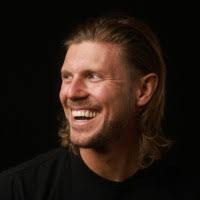
- The idea: Andrew Matson runs Home Court Roofing in Louisville, Kentucky as a place where young people learn sales, discipline and entrepreneurship, not just a place to sell roofs.
- The system: New reps go through a 90-day development curriculum that blends D2DU sales training with personal development material Andrew built from his own coaches and books.
- The takeaway for owners: Developing people is a business strategy. It shapes who you recruit, how you train, who you promote and how much of the business you can hand off.
On this episode of the Roofing CEO Podcast, host Mike Abramowitz sat down with Andrew, owner of Home Court Roofing in Louisville, Kentucky, to talk about how he recruits young people, how he develops them into closers and leaders, and why he wants his roofing company to become what he calls an "entrepreneurial factory." If you own a home service company and you are trying to figure out how to develop roofing sales reps who stay, grow and eventually lead, this conversation is a useful case study.
The Story That Defines the Culture
Mike opened by asking Andrew for the short version of the story behind his company's culture. Andrew's answer was not about revenue. It was about experiences.
Andrew Matson: "A lot of my, um, satisfaction and, you know, excitement about this comes from helping my reps get new experiences."
He talked about the number of reps he has "set on their first flight, taken out of the country, opened their eyes to travel," and later in the episode he estimated it at "probably 15, 20 guys I've put on a plane for the first time in their life."
Then he told the story of Jacob, a rep who has worked for him for a year and a half to two years and is now stepping into more leadership roles. When Jacob started, he was working nights at UPS, making "maybe like four or $500 a week." He had no sales experience and was, in Andrew's words, "a very shy kid." According to Andrew, "it took, you know, eight to nine months for him to really start to, to get it."
The payoff came at the start of the year. Andrew said Jacob "had four months in a row to start off the year, you know, making over $10,000," and then bought a Corvette Z06, a car he had dreamed about "since he was like 12 or 13 years old." He was 20 years old.
What matters for owners is not the car. It is what Andrew credited for the change: consistent coaching, a staff member focused on personal development, and a culture that treats growth as the job.
Andrew Matson: "It's super exciting for me, um, with that more so than, you know, seeing people's bank account rise or even my bank account."
Sales Is Personal Development in Disguise
Andrew described the philosophy that drives his organization in one line he said he has discussed with Sam Taggart: "roofing is really and sales in general is just personal development in disguise."
That framing changes how an owner builds a training program. If sales skill is mostly a byproduct of the person a rep becomes, then the training system has to work on the person, not only the pitch.
Andrew put it this way: "sales is more about that like internal conversation a lot of times more so than it is like, oh, what do I say to overcome this objection."
He went further. The questions he wants new reps asking are about consistency and identity: "how do I stay consistent enough every single day? How do I grow into the version of, you know, the version of the person that I want to be?"
Inside the 90-Day Development Curriculum
Mike, who spent 20 years with Cutco and said he trained "over 5,000 young people," asked the practical question every owner should ask: is there an actual curriculum, or is development just a promise?
Andrew's answer describes a two-part system:
- Sales skills from an outside platform. "We use, um, the D2D Experts platform, um, D2D U." Andrew said he has "built out a ton," and that as new reps go through their first 90 days, "it's 20 or 30% the stuff that's in there. And all that's, you know, sales stuff."
- Personal development he built himself. The rest comes from "stuff from three or four different coaches that I've had" and books, assembled into a curriculum "so that they can learn more about themselves."
He points new reps to the trainers on the platform for the sales craft: "So listen to them on what to do and what to say."
Andrew Matson: "This is Sam and, you know, Chase and some of the other guys that are in there. I'm like, they're all better at sales than I am."
The lesson for owners: Andrew does not try to be the source of every skill. He uses a proven sales curriculum for the technical layer and spends his own energy on culture, standards and personal growth. If you want to put the rep-level sales training piece on rails, D2DU's sales training is the curriculum Andrew described using. The owner's job is to build the system around it.
Why Roofing Works as the Vehicle
Andrew did not start in roofing. He said he "was on a track to do financial planning" and "was at a bank," and that he had "done two or three different jobs over the 15 years since I graduated from college before I got into roofing."
What drew him in was the product and the freedom. He described roofing as "something that people need" and "a very tangible thing to sell." He even said, "I really don't even think like door-to-door roofing sales is really sales at all. It's really just informing people and letting them know like how the insurance process works."
He noted in the episode that the insurance side has shifted, with "more ACV type policies," but his larger point was that the reason he chose roofing has not changed.
Andrew Matson: "We talk about it all the time at our company is discipline equals freedom."
That phrase is what Andrew says he is "selling to the reps." He pointed to the economics as part of the appeal, saying reps "can make, you know, three, four, five, six, 10 grand on, on a single deal. And while still also being able to help people."
Building an Entrepreneur Factory
The most important part of the episode for owners is Andrew's long-term vision. On the form he filled out before the show, he wrote that he wants Home Court Roofing to be the premier place in Louisville for young people to learn. Mike asked what that really means.
Andrew said the idea solidified on a mastermind trip to Montana. His goal is for himself and Home Court Roofing "to be like the premier like entrepreneurial factory," a place where young people who are "aspiring to own their own business or want to know about sales" come to learn.
He is explicit that this starts in the interview. He tells every candidate the same thing:
Andrew Matson: "If you're here for, you know, a month, a summer, two years, five years, or a career, like I want to make sure that this is a good experience for you."
The core skill he wants to teach is a mindset shift. In his words, it is moving people out of "oh, I work for a salary, I work this hourly rate" and "into like this, um, this mindset where like you can go and make more money and selling value rather than your time."
Rebuilding the university pipeline
Andrew also described the recruiting channel that feeds this model. "We're working on rebuilding up our relationship with University of Louisville and some of those places from our last company," he said. At his previous company, "we had a lot of success bringing in, you know, five, six, seven guys every single summer."
If recruiting is the bottleneck in your company, this is the pattern to study: a clear promise, a repeatable source of candidates, and a development path that makes the promise true. For the recruiting machine itself, the tools and done-for-you options live at Recruitomatic, and the owner-level view of the pipeline is covered in How Owners Build a Recruiting Pipeline.
Why He Took On This Mission
Mike pushed on the obvious question. Andrew is growing a family and a business. Why make developing other people his responsibility?
Andrew said he has "a coach's mindset," shaped by sports and by coaches of his own, naming Sam as one who "stands out." Sales changed his family's trajectory, and that made him "more passionate about that."
He returned to Jacob to show why the mindset matters. Jacob's dad had worked at one big company for 25 to 30 years. About three months after Jacob started, Andrew said, "his dad got laid off." That moment, in Andrew's telling, "resolidified his commitment" because it showed him he controlled his own path.
Andrew Matson: "Even if like roofing sales isn't for you, like if you can sell, you can always have a job."
From Rep to Leader: Promoting Problem Solvers
Near the end of the episode, Andrew shared a story that every owner who wants to step out of daily operations should hear.
A young team member "didn't work out in sales and so he became a project manager." About a month in, he asked Andrew why he had been chosen. Andrew's answer: "because you're a problem solver, like that helps me so much, especially as a business owner. Like I don't have time to figure out all of these like small problems."
He described what changed when he gave that person room to act: "giving him more latitude to make decisions on his own and like solve these problems has been a, you know, a game changer for me." That same morning, the project manager had asked whether the day's installs were close to the office. Andrew's reply: "I don't even know where these installs are today. So like, you'll have to look that up."
That is what delegation looks like when it works. The owner no longer holds the answer, and the business keeps moving. If you are still the person every small problem routes through, Stop Being the Bottleneck lays out a practical plan for changing that.
Lean on Mentors
When Mike asked if there was anything Andrew wanted to add, he offered one piece of advice: "lean on mentors. People that are ahead of you, um, are more willing to help than you would think."
His advice is to reach out to the people you want to become: "take them to coffee, like spend a little bit of time with them and pick their brain."
Andrew is in Sam's mastermind group, and he summed up his approach with a simple rule: "you never want to be the biggest fish in the room."
Andrew Matson: "If that's the case in every room that you walk into, you're not, you're not learning."
How to Apply Andrew's Model in Your Company
You do not need to copy Home Court Roofing to use what Andrew described. Here is how an owner can translate the episode into an operating plan. These are our recommendations, built on the themes Andrew shared.
1. Write down your recruiting promise
Andrew tells every candidate the same thing, whether they stay a summer or a career. Decide what your company promises a new hire beyond a commission check, and make sure your development system can actually deliver it.
2. Split the curriculum into two layers
Use a proven sales curriculum for the technical layer, then build the personal development layer yourself. Map a 90-day path so a new rep knows what they will learn each month and a manager knows what to coach.
3. Coach consistency, not just scripts
If you agree with Andrew that sales is mostly the internal conversation, your weekly coaching should focus on the daily habits a rep controls. Put those inputs on a scorecard and review them every week. Our guide to the scorecard every home service owner needs is a good starting point.
4. Build a repeatable source of candidates
Andrew's university relationships produced five to seven recruits every summer at his last company. Pick one or two channels, invest in the relationships, and treat recruiting as an ongoing system rather than a seasonal scramble.
5. Promote problem solvers and give them latitude
Not every great hire will be a great rep. Look for problem solvers, give them room to decide, and build roles around them so more of the business runs without you.
The Bottom Line
Andrew Matson's approach is simple to describe and hard to fake. He hires young people, promises them growth, runs them through a real 90-day curriculum, coaches the person behind the pitch, and promotes the ones who solve problems.
As Andrew put it, borrowing from Zig Ziglar: "Help enough people get what they want and you'll get what you want."
If you want to see where your own people systems are strong and where they still depend on you, start with a free business audit. And if you own a roofing company and are curious what all of that work is worth, Forge Strategic Equity's valuation can show you.