How to Add a Second Revenue Stream to Your Business


- Second revenue stream: Detach Reset Solar turned post-install solar service into a business that reached roughly $10 million a year and over 100 employees.
- Bootstrapped to scale: Hung Nguyen started with zero outside capital, went B2B first, and built every system himself before hiring experts.
- Systems beat speed: A four-month backlog nearly sank the company until KPIs, customer experience, and a dedicated problem finder fixed it.
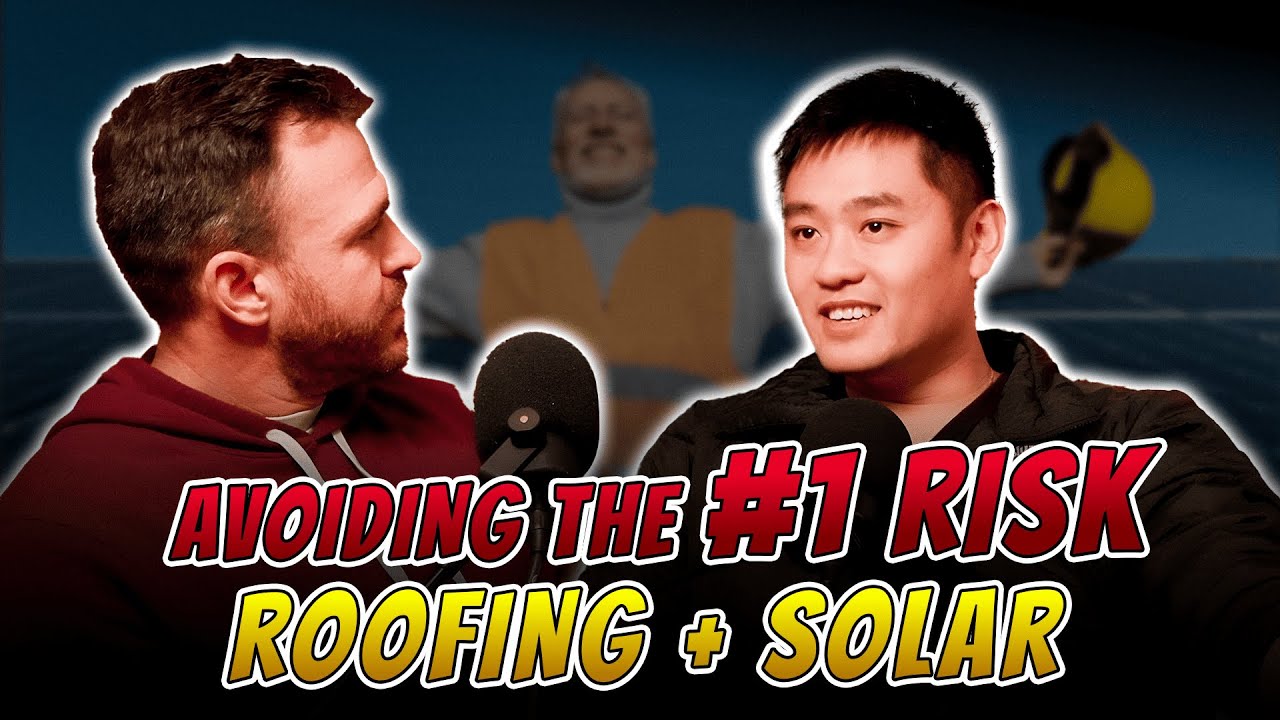
When a homeowner's solar panels go up, most of the industry stops paying attention. Hung Nguyen built a company on what happens next. On The D2D Podcast, the co-founder of Detach Reset Solar sat down with guest host Nathan Hall to explain how one simple idea, taking panels off a roof so it can be replaced and putting them back, grew into a service company doing thousands of jobs a year across three states. His story is a practical playbook for any home service owner who wants to add a second revenue stream, scale without outside money, and build an operation that does not break the moment it gets busy. Here is how he did it, in his own words.
Why post-install solar service is a hidden revenue stream
Detach Reset Solar started on the 3rd of January 2020, right before COVID, when Hung's partner Hunter Adams realized roofers could not sell a roof that already had solar on top. The first version of the business was exactly what the name says: take the panels off, let the roofers re-roof, then put the panels back. Insurance covered the work. What Hung and Hunter did not expect was the second business hiding underneath the first one.
As they learned solar, they found an entire category of demand that the sales side of the industry ignored. For years panels were sold as maintenance free, with no moving parts and a 25 year warranty. That was not true. Systems get chewed up by critters because, as Hung points out, the PV wire is made of soy, which attracts raccoons and squirrels that burrow into roofs and attics. Installers miss rafters and skip sealant. When the original installer goes out of business, the homeowner has no one to call.
Hung Nguyen: everybody's just thinking, oh, how can I install more panels? How can I sell more panels, right?
Hung Nguyen: Most companies didn't realize that there was a maintenance.
That gap became a service line. Detach Reset Solar now takes maintenance and diagnostic calls on systems no matter who installed them, and when the company touches a system it covers the labor for another decade. For an owner, the lesson is bigger than solar: the service and maintenance work your industry treats as an afterthought can be a durable, recurring revenue stream.
How Detach Reset Solar went from $1.6M to $10M in a year
Hung's path through the company was not a straight line. Early on he clashed with a third partner, sold all of his shares, and exited entirely. He came back at the end of October 2022 on a deal: if he rebuilt the systems properly, he would earn back his 50 percent. He did, and the results came fast.
Hung Nguyen: that year we went from 1.6 million to 10.3 million.
Hung Nguyen: In one year, 2023.
Part of that jump came from a decision to get smaller on purpose. The company had become a full EPC, running engineering, procurement, and construction, and after running the numbers Hung decided it did not make sense. They cut back to what they were best at and added solar maintenance as a separate revenue stream. By 2024 the company completed roughly 7,800 jobs, counting each detach and reset, and did around 800 leak repairs in a single year. Hung estimates about 2.5 percent of installs leak, which means a company doing 100 installs a month likely has two or three homes with a roof leak they may not know about.
Why he bootstrapped instead of raising capital
Detach Reset Solar took no outside money. Hung was blunt about where he started financially, and just as blunt about why he would not change the approach. His argument is that capital without experience is dangerous, the same way lottery winners go broke because they never built the financial literacy to handle the money.
Hung Nguyen: we bootstrapped this company since day one.
Hung Nguyen: I do the job first and then I teach someone else to do it.
His first customers came from the Better Business Bureau, where he and Hunter cold called roofing companies and landed a first job within two days. For the first three years the company was almost entirely B2B, working with roofers who send steady volume rather than chasing one homeowner at a time. As Hung put it, "B2B is the fastest way to get yourself like any revenue generating." He credits Russell Brunson's book Traffic Secrets for the idea of going where customers already gather, and points to Cody Sanchez building a pressure washing business by calling Airbnb owners and real estate contacts instead of knocking doors one by one. Today the company is around 35 percent direct to consumer, but the B2B base came first.
The growth problem nobody warns you about
Scaling that fast nearly broke the company. By late 2023 Detach Reset Solar was putting on a confident face while quietly falling three and a half to four months behind. Systems were breaking, jobs got lost in the CRM, and customers called months later asking where their panels were.
The company had to make a painful call: push out the smaller, newer accounts to protect the clients who brought the most volume. That decision brought lawsuit threats and bad reviews. The real bottleneck was not demand, it was people. In January 2023 the whole company was eight people. It grew to more than 200, then was deliberately trimmed back to about 104 and made far more efficient. In Colorado alone the crew count went from two to 27, and at peak the company was doing 65 to 70 jobs a day. Hiring installers was not the hard part, since other companies were failing and releasing talent. Finding specialized maintenance technicians, and affording them while still small, was.
The systems and KPIs that made scale possible
The fix was not working harder, it was building the machine. Hung took the lesson from Tony Hsieh's book Delivering Happiness and the Zappos story, and redesigned the business around customer experience. Instead of waiting for roofers to call back after inspection, the company now tells the client the moment a roof passes inspection and offers to come reset the panels, which shortened the lead time to around three weeks and made it feel even shorter.
Then came the data. The company tracks which installers damage roofs, who follows procedures, and who submits the photo checklist, and acts on it. "We have KPIs for pretty much everything now," Hung said, and leads who cannot meet them get coached or let go. He also brought everything in house, running 100 percent W2 crews instead of subcontractors after bad experiences with subs who were trained poorly by someone else.
Hung Nguyen: dedicate one person in your company to be a problem finder.
Hung Nguyen: how can you come up with a solution if you never knew the problem in the first place?
That advice, which Hung credits to Sam Taggart, is now built into the company: customer service acts as the problem finder, and a separate role solves what they surface.
What it takes to expand into new markets
Growth across state lines is harder than it looks, and Hung is candid that you cannot just move a crew and expect success. At the time of the conversation the company operated in Colorado, Texas, and Florida, and was planning to open three more markets. He picks markets by the density of solar, the age of systems, and how often roofs need to be replaced, which points him toward storm regions with wind, hail, or hurricane damage.
Every market brings its own technical and legal puzzle. Colorado leans on Tesla railless systems, Texas uses rails and steep roofs, and Florida tiles are double screwed and foamed down to survive hurricane winds, so the same crew cannot work every system without retraining. Licensing differs too, from statewide master licenses to Illinois cities that each issue their own. Hung leans into that red tape rather than away from it. His discipline on compliance, he argues, is what protects the warranties and the business, and it is the same mindset behind his favorite tool rule: buy the Milwaukee impact once instead of replacing the cheap one over and over.
How to add a second revenue stream to your home service business
- 1. Find the work your industry ignores. Look for service, maintenance, or repair demand that competitors treat as an afterthought, the way Detach Reset Solar found post-install service.
- 2. Start B2B. Sell to companies that already have the customers, like roofers, insurers, or agents, so one relationship sends you many jobs.
- 3. Bootstrap and build it yourself first. Learn each role before you hand it off, so you can manage and outsource it well later.
- 4. Protect your best clients when you scale. When capacity gets tight, prioritize the accounts that drive the most volume rather than failing everyone at once.
- 5. Track KPIs and act on them. Measure quality and procedure compliance by crew, then coach or replace based on the data.
- 6. Assign a problem finder. Give one person or team the job of surfacing problems early so your solvers can fix them fast.
Frequently asked questions
What is solar detach and reset?
Detach and reset is the service of removing solar panels from a roof so it can be repaired or replaced, then reinstalling them correctly afterward. As Hung Nguyen explains in the episode, roofers often cannot re-roof a home that already has solar, so a specialized company handles the removal and reinstallation, frequently billed through insurance.
Is post-install solar maintenance a real business?
Yes. In the episode, Detach Reset Solar completed around 7,800 jobs in 2024 and roughly 800 leak repairs in a single year. Because many systems were sold as maintenance free and some installers have gone out of business, there is ongoing demand for service, diagnostics, and repairs on existing solar systems regardless of who installed them.
Should you bootstrap or raise capital to start a home service business?
Hung Nguyen bootstrapped Detach Reset Solar with no outside money and argues that capital without experience is risky, comparing it to lottery winners who go broke. His view is that building the business with your own effort forces you to learn the systems you will need at scale. It is one owner's perspective, not financial advice.
How do you fix long lead times in a service business?
In the episode, the company cut a four-month backlog to about three weeks by redesigning around customer experience, proactively contacting clients when a roof passed inspection, tightening its CRM and scheduling, and adding the specialized people it was missing. Hung credits the customer-experience mindset from the book Delivering Happiness.
The takeaway
Hung Nguyen's story is a reminder that the most valuable business can be the one hiding behind the obvious one. He did not out-sell the solar industry, he built the service layer it forgot. He bootstrapped it, went B2B first, survived a near-fatal growth spurt, and turned the save into a system driven by KPIs and customer experience. He described it as nine years of work before the tenth year became the overnight success. For any home service owner, the path is the same: find the overlooked work, build the machine, and do it right the first time.