How Aptive Scaled to Half a Billion: Vess Pearson on Retention, Upside and Letting Go of Control

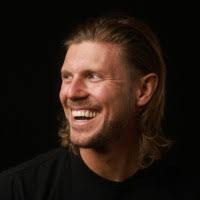
- The engine: Aptive CEO Vess Pearson says the company grew by obsessively solving problems, training in ways that were actually different, and keeping its best people instead of running a revolving door.
- The retention lever: Top performers stayed because they could share in the upside. When Aptive sold, Vess says employees were paid out "over nine digits."
- The owner lesson: Diversified revenue makes a business more valuable, and an owner who clings to control is "very okay with mediocrity."
Most home service owners dream about adding a zero to their sales team. In this episode of The D2D Podcast, Sam Taggart sits down with someone who added a few. Vess Pearson is the CEO and co-founder of Aptive, a 20-year veteran of door-to-door, and the leader of a company Sam describes as having "2,500 sales reps, 2,500 other employees" and on track for "over a half a billion essentially in revenue" in the year the episode was recorded. When Sam calls it the top of residential pest control, Vess clarifies: "Residential, we're three."
This was not his first build, either. Sam points out that Aptive was not Vess's first acquisition, with earlier chapters at Alterra and EcoFirst. So the conversation is less about knocking doors and more about the machine behind them: how you train, how you keep people, how you make a company worth buying, and how you stop being the person who has to touch everything.
Here is what owners of any home service company can take from it.
The Real Skill of an Entrepreneur Is Endurance Around Problem Solving
Sam opens by asking what Aptive did right for a decade straight. Vess does not answer with a tactic. He answers with a definition.
Vess: "The key to entrepreneurship is endurance around problem solving. Problem is so many people run into a problem and they run out of endurance and... they stop trying to solve problems."
He frames problems as "opportunities for growth, for new learning, for expansion," and says that for a long time Aptive solved them "in a very systematic... obsessive way."
That is a useful lens for any owner who feels stuck at a revenue ceiling. The ceiling is rarely one big problem. It is a stack of unsolved small ones that the owner stopped attacking. If your weekly rhythm does not surface problems and assign them to someone, you are relying on endurance alone. A simple operating cadence, like a Level-10 weekly meeting, is one way to make problem solving a system instead of a mood.
Training That Is Actually Different, Not Just Claimed
Early on, Vess says, Aptive "put our stake in the ground" on training. The promise was bold: if you sold with another company and came to Aptive, "we would get you to sell a lot more." That promise attracted strong talent, and that talent then taught the rookies. In his words, "it just... really compounded."
But he is quick to call out the cliché.
Vess: "Saying that we train well sounds so cliché and everyone says it. We hate smoke and mirrors. So like, what are you actually doing different?"
He lists the questions that separate real training from a slogan: is your pitch different, is your technology different, is the data that informs who you sell to different? Aptive was "one of the earliest companies to start selling with an app," using a tool that helps reps "dive into their exact stats and decision makers and close rates." Sam adds the detail that stuck with the industry: Aptive did not count door knocks, it counted decision makers. Vess confirms it: "Exactly."
His conclusion is a warning for owners who lean on recruiting promises: "don't just say you have the best training, like truly try to differentiate because great reps are going to see... right through that."
For an owner, the takeaway is to treat training as a product you can describe in specifics, not a line in a recruiting ad. If you want to formalize it, here is how to build a branded training university for your team.
Retention Beats a Revolving Door
Training brought people in. Retention is what let Aptive keep its footing as it scaled.
Vess: "If your business is a constant revolving door, especially when it's talented individuals that are leaving you, it's going to be really hard to keep your footing."
Vess is candid: "we haven't been perfect at this," but says that "for a really long time, we didn't lose anybody that was a high performer," and that the company has found its footing again so that "if you succeed with us, you stick with us."
The key, he explains, was "helping reps feel like they were part of the bigger picture, that they weren't just there to get a paycheck that year, but that they would actually be able to participate... in the upside down the road."
What Culture Means Now
Vess draws a sharp line between perks and culture. Ten or fifteen years ago, he says, company culture meant a basketball court, a ping pong table or cereal in the break room. Today it is different:
Vess: "Company culture is, no, I feel autonomy in my job. I feel like I'm part of the big picture. I feel like I have a career path."
The perks, he says, "are just perks. That's just status quo now." The real question an employee is asking is "what is this business doing to make me better and to advance me?"
If you have been investing in the break room and wondering why people still leave, this is the gap. The fix is a visible career path and a real stake in the outcome. For the rep side of this problem, see how to keep your sales reps.
Give Your Key People a Piece of the Upside
When Aptive sold, Vess says, "we paid out to employees over nine digits," and he is clear it was not annual earnings but a bonus on top. Later he adds that "we had 30 million dollars reinvested by our employees back into Aptive."
Sam connects this to the long-term incentive plan he saw at Vivint, the company Vess says was the pacesetter across the street that "lit fire inside of me." Then Sam shares a story from a coaching call with the owner of a roofing company that had done two million. The owner wanted to sell in three years but had not given his top producer any stake. Sam's response:
Sam: "I could probably, like, bet you at 90% accuracy that dude's gone in a year. And you're now just like restarting again if you don't figure out a way to get him a piece of that upside if that's your vision."
Sam later puts the owner's side of it plainly: "a lot of business owners they struggle sharing that a little bit. Like it's like this is my business." And they "don't have a really strategic way to kind of loop those key retention people in."
For an owner planning an exit, this matters twice. The people producing most of your revenue are part of what a buyer is paying for. If they walk the year before a sale, so does a chunk of your value. Building a plan to share upside is not generosity. It is protecting the asset. If an exit is on your horizon, start with business exit planning.
Teach Your People How Earnings Actually Work
One of the most practical parts of the conversation is about pay. Vess describes a rep who wanted to make sure he paid his team "the most," and he pushes back on what that means.
Vess: "The commission percentage is one of 10 things that actually determine earnings."
He lists the others: close rate, how many decision makers you talk to, monthly price, plan mix, selling multi-year, retention, and whether you are "putting your top reps in the best areas." Multiply all of those by a commission rate and that is your total earnings. "But too much of the focus is just the commission rate."
His point is that Aptive could, in theory, be the lowest on commission rate and still have reps earn more by "winning on all other eight areas." The goal is "creating business people who are sophisticated and smart." Sam sums it up: "They don't bite on the whole pay scale manipulation."
For owners, this is a compensation design principle. A comp plan that only competes on percentage is a race to the bottom on margin. A comp plan supported by better leads, better tools and better retention can pay more while costing less. More on that in sales rep compensation plans that scale.
Diversified Revenue Builds a More Valuable Business
Sam asks where the industry is heading now that Aptive has private money behind it. Vess explains why the door-to-door program still matters: with "700,000 active customers, you're going to lose a lot of customers," mostly at end of term rather than from unhappiness, so "just for us to replace what we're losing, we need the direct-to-home program to grow."
He also explains what that channel offers that others do not: density, the ability to choose the customers you sell, and predictability. "If I say we're going to do 220,000 accounts, we're going to do 220,000 accounts."
But here is the part every owner thinking about valuation should hear:
Vess: "They want diversified revenue... They don't want all of your revenue just to come from direct-to-home... That is what creates a better business, a more valuable business."
He lists the mix: inside sales, "sprinkle in some M&A," and "you need your employees to be selling." In the episode he says Aptive would do "nearly 60,000 accounts with our digital program" that year and had "already done two M&A deals."
He even ties it back to retention: if your people own a piece of the business or share in profit, "those... other verticals are going to make you more valuable and you get to participate in that upside."
If one channel drives nearly all your revenue, that concentration is a discount in a buyer's eyes. The one-page growth plan is a good place to map what a second or third channel would look like. And if you own a roofing company and want to know how a buyer would value yours today, Forge Strategic Equity runs that math.
If You Are Obsessed With Control, You Are Okay With Mediocrity
Late in the episode, Sam asks the question most owners wrestle with: at 5,000 people, when you meet someone who has been there two years and you have never seen them, how do you let go of control?
Vess: "If you have an obsession over control then you are very okay with mediocrity... because you cannot be great controlling everything."
His formula is short. "If you want scale and greatness you have to go and attract experts in the various business units throughout the business. And once you've attracted those experts you give them full autonomy, provide vision and accountability, but then let them sprint."
Hire People Who Have Already Done It
Sam pushes on how you know you actually got an expert. Vess's answer: "what they say they've done versus what you've been able to verify that they've done is... massive."
Because Aptive wants to reach a billion dollars in revenue, he says, "I had to find executives that had actually been at billion dollar businesses." He walks through a leadership team pulled from companies like Nu Skin, Vivint, Republic Services, Pepsi and Procter & Gamble, and sums up the principle: "I've found people that I know have actually done it as opposed to yeah I'll take you there but they've never seen it."
Sam calls the alternative "in theory," and Vess agrees.
You do not need a billion-dollar résumé to apply this. Hire for the next stage you are trying to reach, verify the claim, then give the person real ownership of the seat. An accountability chart makes those seats visible, and building a leadership team is how you finally step back.
The Payday Is Not the Prize
Sam asks what still drives Vess after a sale that could have let him walk away. Vess tells the story of selling Alterra, a life-changing sum he had "romanticized" the whole time he was building. When the wire hit, he called his wife Angie, and she said, "cool well when are you when are you going to be home?"
Vess: "All of the joy has to be in the process and the hardship and the trial. And if you're waiting for happiness at the end of the deal you're going to be disappointed."
Now, he says, the goals keep moving, from an accounts record to $100 million in revenue to simply being profitable to bigger targets. And he feels "tremendous burden in a good way to deliver on those people who really really bet on us." Aptive, he says, started as "a direct to home company that happened to sell pest control," and now wants to be a leading consumer services business: "We don't want to just be bigger, we want to be better."
Integrity Is a Growth Strategy
Vess closes with a message to the whole industry. Get licensed. Respect no soliciting signs. Respect the three-day right of rescission. He argues that "if we would all level up and just do things the right way... door-to-door could even grow faster because people would realize, oh, there actually isn't a more effective way to grow your business." Some private equity firms and strategic buyers, he says, are afraid of door-to-door "because of some of the stink."
Sam's version for owners: "why don't you operate like as if you were big today as you were small? Because you take your business serious instead of taking it so casually."
For an owner, that is the thread that ties this whole episode together. Train in ways you can prove. Share the upside with the people who build it. Diversify how you grow. Hire experts and let them run. And run the company today the way a buyer, a regulator and your best employee would want to see it run tomorrow.