3 Tips to Scale Any Business

Every owner wants to scale. Few want to do the unglamorous work that actually makes scaling possible. In this talk, Sam Taggart, founder of The D2D Experts, strips the problem down to three principles that apply whether you run a roofing crew, a real estate practice, or a mortgage shop. None of them involve a new logo, a fancier website, or another course. All three start with the same uncomfortable truth: you have to go do the thing.
To make the point, Sam opened with a story from his early days knocking doors for an alarm company.
The Hose Story: Treat Every "No" Like an Objection
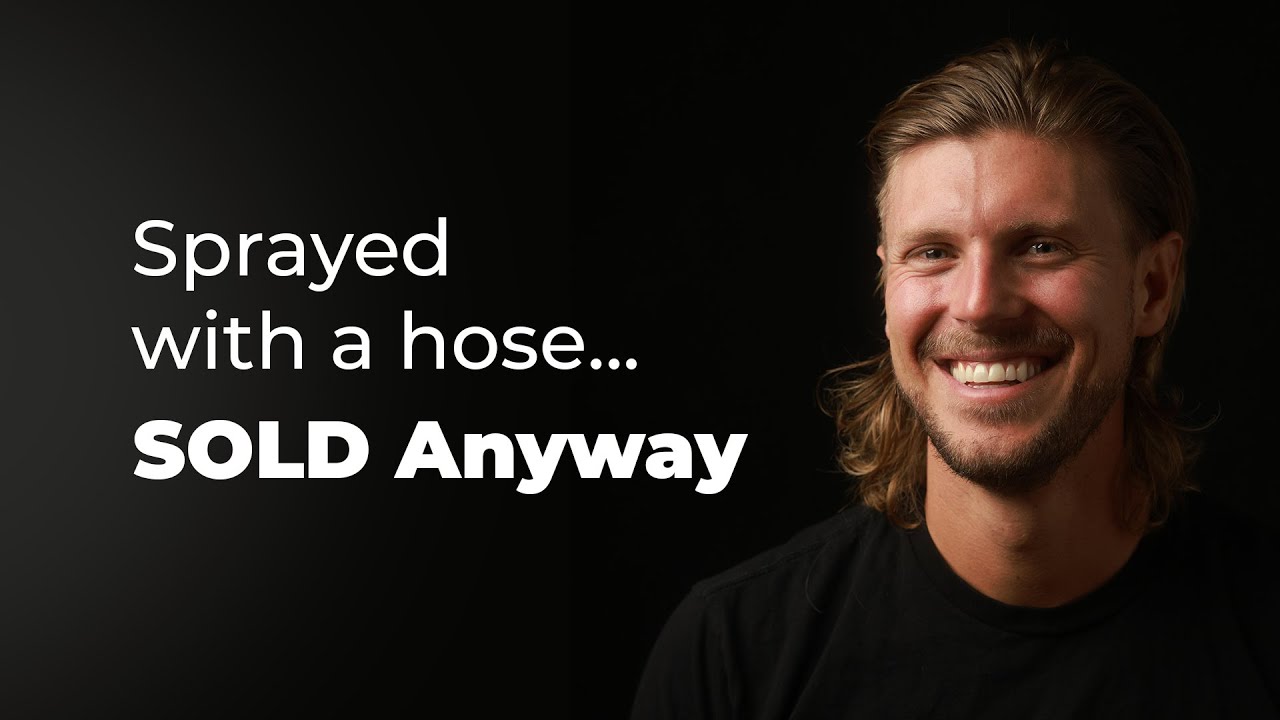
It was Sam's third weekend on the doors, 100 degrees out, and he walked up on a homeowner who wanted nothing to do with him. The man told him to go away, then grabbed the garden hose and sprayed him. Most reps are gone at that point. Sam stayed.
Sam Taggart: So what we're doing is I just treated it like an objection.
The homeowner sprayed him a second time. Instead of retreating, Sam leaned in: "look, sir, if, uh, if it wouldn't be too much to ask, it's 100 degrees out here. Could you just hit me one more time?" The man threw the hose down, stormed inside, and called the police. So Sam went next door, knocked soaking wet, and started writing up the neighbor. The doorbell rang mid-paperwork. It was the cops.
Rather than let the officer kill the deal, Sam walked him over, showed his permit, and asked him to vouch: "Tell him I'm legit." He finished signing the deal and, by his own account, "put four signs facing the neighbor."
The lesson underneath the bravado is simple. Rejection is not a stop sign. It is the start of the conversation. The hose, the yelling, the police: none of it was a reason to quit, because none of it was actually about Sam. It was noise standing between him and a decision the homeowner had not made yet. That reframe, treating resistance as information rather than defeat, is the common thread through everything that follows. From there, Sam laid out the three things he teaches.
Principle 1: Don't Skip Steps
Sam has knocked doors since he was eleven, and he is blunt about why that matters: you cannot skip the step of learning how to sell.
Sam Taggart: I had to learn sales first because if I want my business not to fail, my sales can't fail.
Most people do the opposite. They get excited about the trappings of a business and ignore the engine. Sam calls it "death by business cards." These are owners who pour energy into their logo, their sweatshirts, and their website while nobody is buying anything.
He told the room about a webinar he had done with a Tony Robbins mastermind full of international coaches. He went around the room asking the same two questions. How long have you been doing this? Six months, eight months, twelve months. How many customers do you have? "Zero." His point was not to be cruel. It was to show how easy it is to confuse building a brand with building a business. The brand is not the problem. The missing sales are.
That is why the first principle is to resist the shortcut. The marketing, the map, the merch: none of it substitutes for the ability to create revenue. As Sam frames it elsewhere in the OwnersOS operating system, the machine only scales once the owner has proven the fundamentals it is built on.
Principle 2: Be a Carnivore, Because Sales Is the Cure-All
The second principle came wrapped around Sam's book, which he mentioned had just come out and hit bestseller at the time of the talk: Eat What You Kill. The subtitle of the idea is that too many owners stop thinking of themselves as salespeople the moment they become founders.
Sam Taggart: it's how to become a sales carnivore because I think a lot of people, they go into business, but they forget that they're in sales.
And in Sam's telling, that forgetting is expensive. Sales, he argued, is not one department among many. It is the fix for almost everything a struggling owner is worried about.
Sam Taggart: sales is probably gonna cure your money problems, probably relationship problems you got, probably debt problems you got, probably a lot of things you got. Sales is a cure all.
The trap he sees is owners who try to cut their way to health instead of selling their way there. They obsess over pinching pennies and trimming the accounting line items, and they forget to just go get more revenue. He called that mindset an "herbivore," and he contrasted it with a speaker named Sean who had worked the room earlier. Sean had stood up, given out his cell phone number, and essentially knocked every door in the audience.
Sam Taggart: that's why Sean's standing up here is he had the audacity to be like, here's my ... cell phone number. If I can make one good relationship, this whole trip was worth it for me.
The herbivore sits in the office with all the ads and all the website traffic and wonders why the phone will not ring.
Sam Taggart: We're posting on Instagram and we're wondering why our phone isn't ringing. I'm like, that's an herbivore.
The carnivore picks up the phone. Whatever your channel is, a knock, a call, a text, an email, a Facebook ad, a flyer, a mailer, the behavior is the same. You initiate contact, on purpose, every day. The medium is not the point. The decision to go hunting for the next conversation, instead of waiting for it to arrive, is the point.
Principle 3: Don't Get Emotional With "No"
The third principle is the one that quietly limits most salespeople: they let a "no" hit them personally.
Sam Taggart: most people, they get so emotional with no.
The fear of rejection makes owners and reps conservative. They only chase the easy, high-probability conversation, the warm referral or the person who already likes them, because it feels safer. Sam named the mechanism directly: "we fail to act in lieu of fear of getting rejected." The cost is a tiny number of at-bats and, predictably, a tiny number of wins.
He proved the point live with two volunteers. The first was a realtor named Saad who sells, in his words, "15, 20" homes a year. When Sam asked why the number was not higher, Saad already knew the answer.
Saad: Because I'm not talking to enough people.
Saad was not bad at selling. In the mock door-knock, he engaged Sam with real questions, asking whether it was his forever home, what would make him move, and what that next step would look like, instead of word-vomiting a pitch. The skill was there. The volume was not. Sam's coaching was short: "Go talk to more people." His projection, if Saad did that for seven hours a day, was equally blunt: "watch you sell like a hundred homes this year."
The Killer of the Pause
The second volunteer, Ivan Oberon, introduced himself as a private money and mortgage broker, a "kingdom lender" who finances everything from a "$50,000 HELOC to a $40 million" development. In the role-play, Ivan handled Sam's objections well. Then he made the mistake almost everyone makes. After landing a great line, he paused and waited.
Sam Taggart: We call this the killer of the pause. You had a great response, yeah? But then he's like, did it work?
That pause, Sam explained, is a quiet request for the prospect to validate how good your objection handling was. It hands control back to the buyer at the exact moment you should be moving them to the next step. The fix is to stop performing and keep leading. Deliver the response, then move. Do not sit there waiting for applause.
The Bottom Line: Get Off Your Ass
Sam closed by stripping his whole message down to one line. He does not teach digital marketing. He does not teach the fancy tactics people come to conferences to collect.
Sam Taggart: I just teach get off your ass.
He pointed at the closers on that stage, the Sean Whalens, the Finnegans, the Steves, and reminded the room that nobody sees the door count behind those results. The dials, the knocks, the rejection: that is the part that never makes it to Instagram.
Sam Taggart: They're not willing to just pick up the phone and make a hundred dials. They're not willing to go on the streets and go make enough door knocks. They're not willing to go actually do what it takes to be successful.
That is the thread running through all three principles. Don't skip the step of learning to sell. Remember that you are always in sales. And stop letting "no" shrink your activity. Scaling a business is less about a secret and more about the volume of reps you are willing to take: on the doors, on the phone, and in every conversation you have been avoiding.
For home service owners, the activity is only half of the equation. The other half is building the systems and operating rhythm that let all that activity compound instead of burning out the founder. That is the layer this talk points toward: get the reps in first, then build the machine that carries the load so growth does not depend on you knocking every door yourself.
- Don't skip steps: Learn to sell before you chase logos, websites, and merch. As Sam put it, "if I want my business not to fail, my sales can't fail."
- Be a carnivore: You are still in sales as an owner. Sales is the cure-all; initiate contact every day instead of waiting for the phone to ring.
- Don't get emotional with "no": Fear of rejection shrinks your activity. Talk to more people, and after you handle an objection, move the prospect instead of pausing for validation.